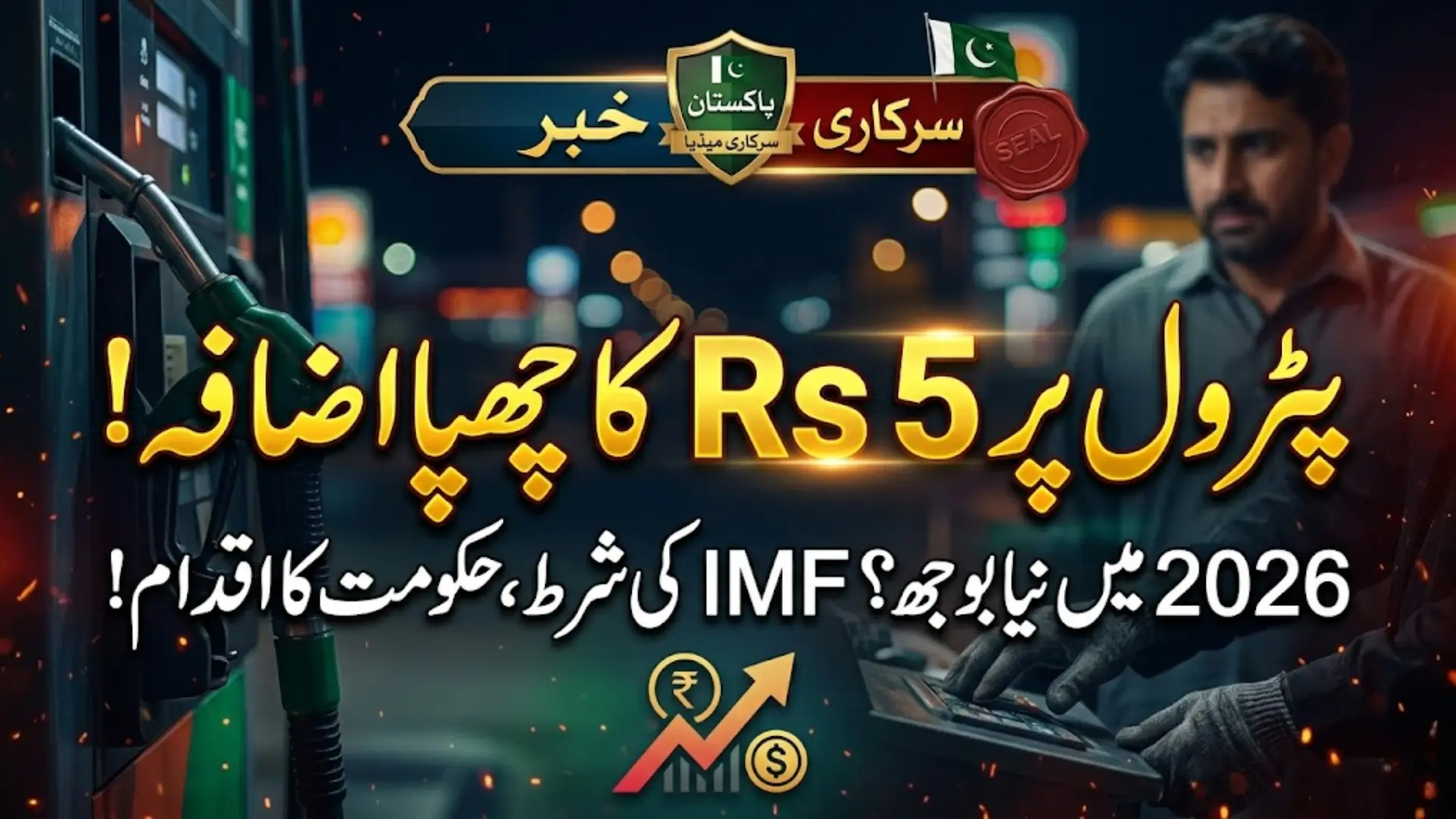
Petroleum Levy Increase in Pakistan 2026
The Petroleum Levy Increase in Pakistan 2026 is being planned as part of the government’s broader strategy to manage financial pressures and stabilize the economy. According to available information, the federal government is considering raising the petroleum levy on petrol and diesel by Rs. 5 per litre. This move is aimed at increasing revenue without immediately increasing base fuel prices, which are already sensitive for the public.
This decision reflects the government’s effort to balance economic stability with public affordability. By adjusting the petroleum levy, authorities can generate additional income to support fiscal needs while preparing for upcoming international financial agreements. The Petroleum Levy Increase in Pakistan 2026 is therefore not just a price adjustment but part of a larger economic plan.
- Proposed increase: Rs. 5 per litre on petrol and diesel
- Focus on improving government revenue
- Strategy to avoid direct fuel price hikes
- Part of pre-IMF agreement planning
You Can Also Read: PSL 11 Commentary Panel 2026 Announced – Full Bilingual Lineup Revealed by PCB
Petroleum Levy Increase in Pakistan 2026 Linked with IMF Agreement
The Petroleum Levy Increase in Pakistan 2026 is closely connected with ongoing discussions with the International Monetary Fund. Pakistan is currently working towards a staff-level agreement, which is expected to be finalized soon. This agreement is important for unlocking financial support and maintaining economic stability.

The IMF usually requires countries to implement certain financial reforms before approving funds. In this case, increasing the petroleum levy is seen as a step towards improving revenue collection. This shows that the government is willing to take tough decisions to meet international financial requirements and secure future funding.
- IMF agreement expected in coming days
- Draft economic policies already shared
- Levy increase part of reform commitments
- Helps build confidence with international lenders
Expected Financial Support After Petroleum Levy Increase in Pakistan 2026
One of the major outcomes of the Petroleum Levy Increase in Pakistan 2026 could be the release of a $1.2 billion tranche from the IMF. Once the agreement is finalized, it will be signed by key officials, including the finance minister and the State Bank governor. This funding is crucial for strengthening Pakistan’s foreign reserves.
The financial support will help the country manage its external payments and stabilize the currency. It will also provide breathing space for the government to implement further economic reforms. Therefore, the petroleum levy adjustment plays a key role in unlocking this much-needed financial assistance.
- Expected IMF tranche: $1.2 billion
- Agreement signing by finance authorities
- Strengthening foreign exchange reserves
- Supporting economic recovery efforts
You Can Also Read: Huawei Enjoy 90 Series Launched – Full Specs, Price, and Features of Pro Max
Revenue Measures Behind Petroleum Levy Increase in Pakistan 2026
The Petroleum Levy Increase in Pakistan 2026 is part of a broader plan to increase both tax and non-tax revenues. The government is under pressure to reduce its fiscal deficit, and increasing the levy is one way to achieve this goal. At the same time, authorities are making spending cuts to balance the budget.
One significant step already taken is the reduction of around Rs. 100 billion from the development budget. This shows that the government is trying to control expenses while also increasing income. These combined measures are necessary to meet IMF conditions and ensure long-term financial stability.
- Increase in tax and non-tax revenue
- Rs. 100 billion cut in development budget
- Efforts to reduce fiscal deficit
- Balanced approach to income and expenditure
You Can Also Read: Samsung Galaxy S26 Quick Share Feature to Support Apple Devices
Energy Sector Challenges and Petroleum Levy Increase in Pakistan 2026
Pakistan’s energy sector is facing serious challenges, including rising circular debt in power and gas sectors. The Petroleum Levy Increase in Pakistan 2026 is being introduced at a time when global oil prices and fertilizer costs are also increasing. These factors are putting additional pressure on the economy.
Regional tensions are further complicating the situation, affecting trade and energy imports. The government must manage these challenges carefully to avoid further economic strain. Increasing the petroleum levy is one of the tools being used to handle these issues and maintain financial balance.
- Rising circular debt in energy sector
- Increase in global oil prices
- Higher fertilizer costs
- Impact of regional economic tensions
Impact of Petroleum Levy Increase in Pakistan 2026 on Public and Economy
The Petroleum Levy Increase in Pakistan 2026 is expected to have mixed effects on the public and the economy. While it helps the government generate revenue, it may also indirectly increase the cost of living. Higher fuel costs often lead to increased transportation and goods prices.
For the general public, this can create financial pressure, especially for low and middle-income groups. However, the government hopes that these short-term challenges will lead to long-term economic stability. Managing this balance will be crucial in the coming months.
- Possible increase in inflation
- Higher transport and logistics costs
- Financial burden on consumers
- Long-term economic benefits expected
You Can Also Read: PSL 11 Live Streaming and Broadcast Channels in Pakistan
Government Relief Measures Alongside Petroleum Levy Increase in Pakistan 2026
Along with the Petroleum Levy Increase in Pakistan 2026, the government is also considering relief measures to support economic growth. One of the key areas of focus is the real estate sector, where tax reductions and incentives are being discussed to attract investment.
Additionally, a concessional housing scheme has already been approved. This is aimed at providing affordable housing options and encouraging overseas Pakistanis to invest in the local market. These steps are designed to balance the impact of increased levies with positive economic initiatives.
- Tax relief proposals for real estate sector
- Incentives for overseas investors
- Approved housing schemes
- Efforts to boost economic activity
Future Outlook After Petroleum Levy Increase in Pakistan 2026
The future outlook after the Petroleum Levy Increase in Pakistan 2026 depends largely on how effectively the government implements its economic policies. If the IMF agreement is successfully finalized, it could bring stability and improve investor confidence in the country.
In the long run, these reforms may help Pakistan build a stronger financial system and reduce dependency on external borrowing. However, consistent policy implementation and public support will be essential for achieving these goals. The coming months will be crucial in shaping the country’s economic direction.
- Expected economic stabilization
- Improved investor confidence
- Reduced financial uncertainty
- Importance of consistent reforms
You Can Also Read: Gold Price in Pakistan Today Surges by Rs. 16,300 After Sharp Market Recovery
Table: Key Highlights of Petroleum Levy Increase in Pakistan 2026
| Aspect | Details |
|---|---|
| Proposed Increase | Rs. 5 per litre |
| Purpose | Revenue generation |
| IMF Support | $1.2 billion expected |
| Budget Adjustment | Rs. 100 billion cut |
| Key Impact | Inflation & economic stability |
FAQs
What is the Petroleum Levy Increase in Pakistan 2026?
It is a proposed Rs. 5 per litre increase on petrol and diesel to boost government revenue and support IMF agreements.
Why is the government increasing the petroleum levy?
The increase is aimed at reducing fiscal deficit and meeting conditions for international financial support.
How will this affect the public?
It may increase fuel-related costs, which can lead to higher prices of goods and services.
What financial support is expected after this increase?
Pakistan is expected to receive a $1.2 billion tranche from the IMF after finalizing the agreement.
Are there any relief measures by the government?
Yes, the government is planning incentives for the real estate sector and has approved housing schemes.
You Can Also Read: Punjab VIP Vehicles Procurement 2026 Approved with Toyota Fortuner and Toyota Hilux