Introduction to Pakistan Ends Solar Net Metering Policy
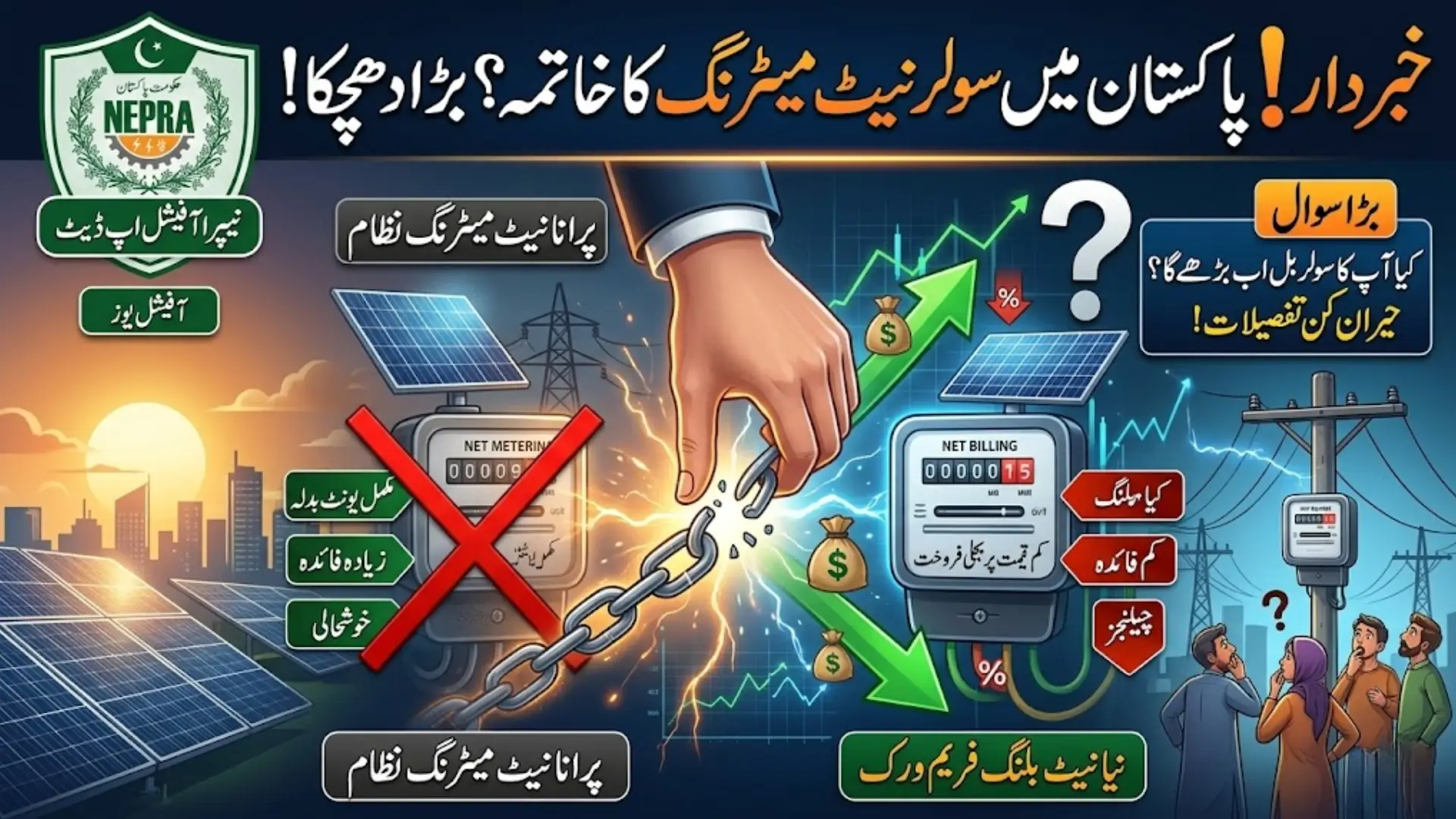
Pakistan Ends Solar Net Metering as the energy regulator introduces a new policy aimed at restructuring rooftop solar compensation. The National Electric Power Regulatory Authority has replaced the traditional net metering model with a net billing framework under the Prosumer Regulations 2026. This major policy shift comes at a time when rooftop solar installations have rapidly expanded, reaching an estimated capacity of 6,000 megawatts nationwide.
The new system is designe to improve financial sustainability in the power sector and ensure fair tariff distribution among electricity users. By modifying compensation rules for surplus solar generation, the policy seeks to create a balanced energy ecosystem that benefits both consumers and utility companies.
- Rooftop solar capacity has grown significantly in recent years
- Net billing replaces one-to-one energy compensation model
- Policy aims to support grid stability and cost fairness
- Existing net metering users retain old contracts until expiry
You Can Also Read: Eid ul Fitr Public Holidays 2026 in Pakistan Announced – Official Notification
From Net Metering to Net Billing Under Pakistan Ends Solar Net Metering Reform
Previously, solar consumers could export excess electricity to the grid and receive equal credit for the units supplied. Under the revised framework introduce after Pakistan Ends Solar Net Metering, surplus solar energy will now compensate at a lower purchase rate. Consumers will still pay full retail tariffs for grid electricity usage, which may reach higher pricing levels depending on consumption patterns.
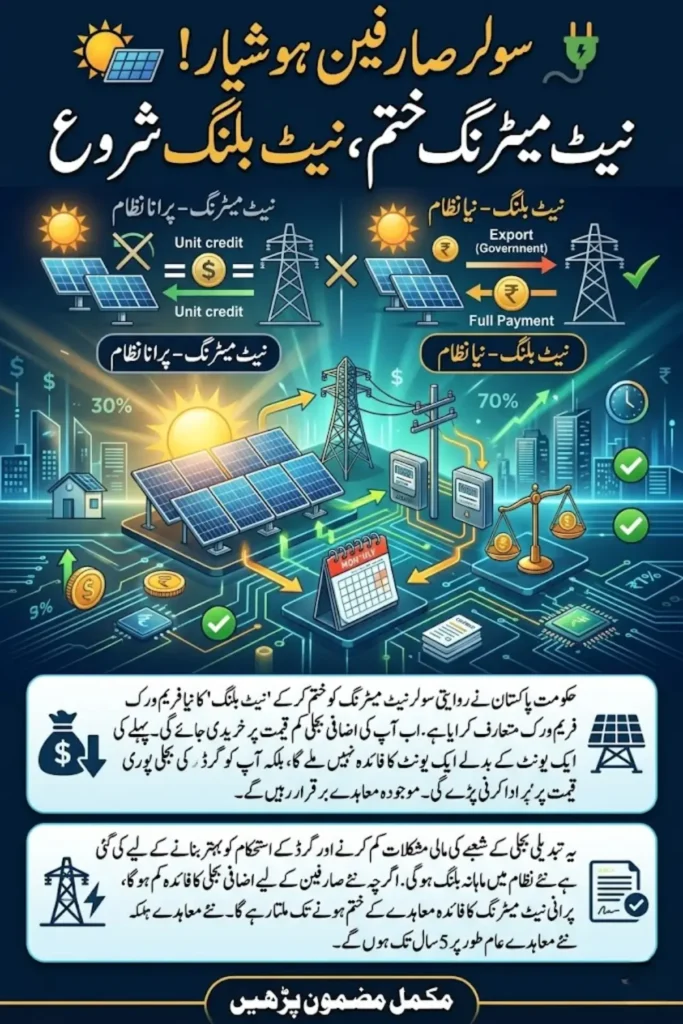
The net billing system will settle electricity accounts on a monthly basis rather than continuous credit adjustments. This structured billing approach is expect to enhance transparency in energy transactions while aligning distribute generation pricing with market realities.
- Surplus solar power compensated at reduced rates
- Monthly billing cycle replaces continuous unit adjustment
- Unified system applies to solar, wind, and biogas prosumers
- Transparent settlement improves tariff management
Eligibility Criteria and Capacity Limits in Pakistan Ends Solar Net Metering Framework
The updated solar policy applies to a wide range of electricity consumers, including residential, commercial, industrial, and agricultural sectors. Distribute generation systems with a capacity of up to one megawatt are permitted under the new rules, ensuring controlled growth of rooftop solar installations across different categories.
Connection voltage requirements and transformer utilization limits have also been introduced to prevent technical stress on the grid. These regulatory measures ensure that solar energy expansion remains sustainable without compromising system reliability.
- Maximum distributed generation capacity set at 1 MW
- Applicable to residential and commercial users at specified voltage levels
- Transformer load utilization capped at safe limits
- Regulatory approval required for new solar connections
You Can Also Read: PSER Registration Door To Door Open in Punjab 2026 – Complete Guide
Table: Eligible Consumer Categories and Capacity Limits
| Consumer Type | Maximum Capacity | Connection Voltage |
|---|---|---|
| Residential | 1 MW | 400V |
| Commercial | 1 MW | 11kV |
| Industrial | 1 MW | 11kV |
Contract Period and Regulatory Authority After Pakistan Ends Solar Net Metering
Net billing agreements introduced after Pakistan Ends Solar Net Metering will typically remain valid for five years, with an option for renewal upon completion of the contract term. During this period, the regulatory authority retains the right to revise purchase tariffs for surplus solar energy to maintain financial equilibrium within the power sector.
The energy regulator is also empowered to issue binding directives and enforce compliance measures when necessary. Utilities are required to provide operational data and cooperate with regulatory oversight to ensure fair implementation of the policy.
- Standard contract duration set at five years
- Tariff adjustments possible during agreement period
- Utilities must share operational performance data
- Regulatory penalties applicable in case of violations
You Can Also Read: 8171 BISP Payment System Error 2026 – Zero Balance Issue for Bank Alfalah and BOP Users
Reasons Behind Pakistan Ends Solar Net Metering Policy Decision
The transition from net metering to net billing was largely driven by financial and technical challenges within the energy sector. Rapid solar adoption reduced electricity sales for distribution companies, leading to significant revenue losses and tariff distortions affecting non-solar consumers. This imbalance prompted policymakers to reconsider the sustainability of the previous compensation model.
Technical factors also played a role in the decision, as excessive daytime solar generation created risks of grid frequency instability. Aligning rooftop solar pricing with utility-scale renewable tariffs was therefore considered essential to maintain long-term energy sector stability.
- Decline in electricity sales impacted utility revenues
- Tariff imbalance increased costs for non-solar users
- Daytime solar peaks created grid management challenges
- Long-term financial projections indicated rising sector losses
Impact on Consumers and Utilities After Pakistan Ends Solar Net Metering
Solar system owners may experience reduced earnings from exporting excess electricity under the new net billing structure. However, existing net metering contracts will remain valid until their agreed expiry dates, ensuring a gradual transition for current solar adopters. Future installations and contract renewals will follow updated compensation guidelines.
For electricity distribution companies, the revised framework offers improved cost recovery mechanisms and reduces reliance on the grid as a virtual energy storage solution. This balanced approach aims to support continued renewable growth without destabilizing the national power infrastructure.
- Lower buyback rates for new rooftop solar users
- Existing contracts remain protected until expiration
- Improved financial recovery for utilities
- Balanced growth of distributed renewable energy
You Can Also Read: 8171 Check Online CNIC 2026 Before Deadline Payment
Table: Net Metering vs Net Billing Comparison
| Parameter | Net Metering | Net Billing |
|---|---|---|
| Buyback Rate | Around Rs. 25.9/unit | Around Rs. 11/unit |
| Grid Tariff | Adjusted through credits | Up to Rs. 50/unit |
| Billing Cycle | Continuous adjustment | Monthly settlement |
Future Outlook After Pakistan Ends Solar Net Metering Implementation
The introduction of net billing under the Prosumer Regulations 2026 is expected to influence future solar investment patterns in Pakistan. While the revised compensation structure may slow rapid rooftop expansion, it is likely to encourage more efficient energy usage and promote grid-friendly solar system planning.
In the long term, the policy may contribute to a more stable electricity sector by ensuring fair pricing for all consumers. Continued regulatory monitoring and possible adjustments in renewable energy strategies will shape the evolution of Pakistan’s clean energy transition.
- Potential moderation in rooftop solar installation growth
- Greater regulatory control over distributed generation
- Improved grid stability and tariff transparency
- Long-term sustainability of renewable energy sector
You Can Also Read: DCP Ramadan KP Gov PK Portal 2026 – Online Registration
FAQs
What does Pakistan Ends Solar Net Metering mean for solar consumers?
It means new rooftop solar users will be compensated under a net billing system instead of one-to-one unit credit. Existing contracts will remain unchanged until expiry.
Why did the regulator replace net metering with net billing?
The change was made to reduce utility revenue losses and maintain grid stability. It also aims to ensure fair electricity pricing for all consumers.
Who is eligible under the new solar framework?
Residential, commercial, industrial, and agricultural consumers with systems up to one megawatt can apply. Connection voltage limits must also be followed.
How will billing be calculated under the new system?
Electricity accounts will be settled monthly based on actual supply and consumption. Surplus solar energy will be purchased at revised rates.
Will the policy affect renewable energy growth in Pakistan?
It may slow rapid rooftop adoption but improve long-term sector stability. The framework encourages balanced and sustainable solar expansion.
You Can Also Read: CM Punjab Free Solar Panel Scheme 2026 – Apply Online, Eligibility Criteria